


TradeGPT Review – Features, Legitimacy, and Hidden Risks (Trade GPT 3.0)
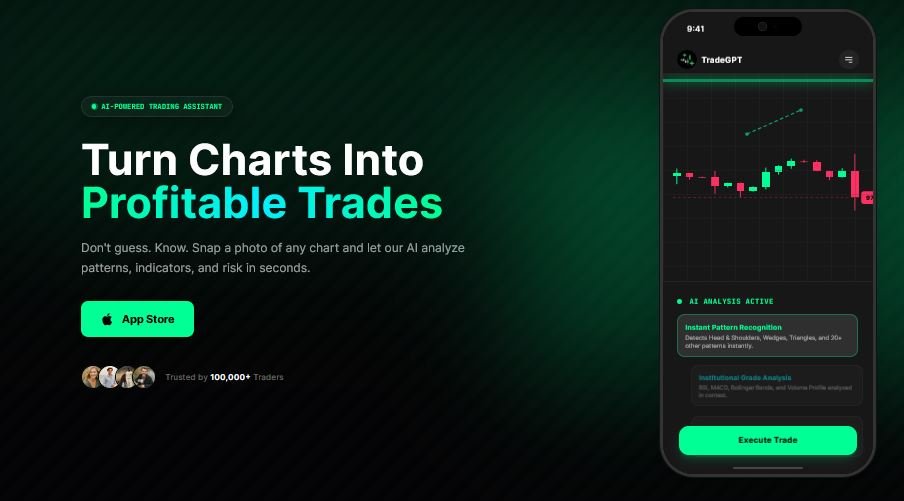
Automated trading software has moved fast from institutional Wall Street desks to retail screens. Promoted heavily under names like TradeGPT and Trade GPT 3.0, this software claims to use machine learning to scan market trends, parse technical indicators, and run trades without human emotion.
The crypto market has no shortage of high-yield promises. Some turn out to be legitimate API-connected execution tools; others are little more than lead-generation funnels for offshore brokers. Finding out where a tool actually sits requires looking past marketing claims, checking regulatory records, examining partner brokers, and looking at real user experiences.
This review breaks down how TradeGPT works, what it costs, how safe it is, and whether it makes sense for your trading setup.
Quick Summary:
| Feature | Details |
| Platform Name | TradeGPT (Trade GPT 3.0) |
| Category | Algorithmic Crypto Trading Software |
| Type | Automated Web-Based Trading Interface |
| Claimed Win Rate | 85%–92% (Unverified third-party marketing claims) |
| Minimum Deposit | $250 USD |
| Demo Account | Available via partner broker dashboards |
| Supported Assets | Bitcoin, Ethereum, Solana, XRP, Forex, Commodity CFDs |
| US Availability | Restricted (Routes through non-US brokers) |
| Mobile Access | Web browser access (No native iOS or Android apps) |
| Customer Support | Email and live chat via assigned broker dashboard |
| Official Sites | tradegpt.app / tradeatlas.app |
| Overall Rating | 2.6 / 5.0 |
| Verdict | High risk. Functions mainly as a marketing bridge to offshore brokers. |
What Is TradeGPT?
TradeGPT presents itself as an AI-powered software that reads market data and executes automated trades. It uses a name meant to ride the popularity of generative AI tools, promising to spot entry and exit points across crypto and forex markets.
Unlike traditional exchanges like Coinbase or Kraken, TradeGPT does not hold your funds or run an order book. It operates as an affiliate marketing bridge. When you sign up, the platform links your account to a third-party brokerage firm. That partner broker takes your deposit, holds your funds, and executes your orders.
The platform targets both complete beginners looking for hands-off trading and experienced traders trying to automate daily setups. You may see it marketed under several names—Trade GPT 3.0 or Trade GPT 360—but these names usually point back to the same network of partner brokers.
How the User Journey Works
-
Registration: You submit your basic contact details on the TradeGPT landing page.
-
Broker Assignment: The system routes your profile to an assigned third-party broker based on your region.
-
Capital Transfer: You deposit your initial capital directly into the broker’s account, not TradeGPT itself.
-
Execution: The automated software connects to the broker’s platform to place buy and sell orders.
Key Features
-
Automated Signal Engine: Scans price action, RSI, MACD, and moving averages to identify trading setups.
-
Broker Connectivity: Automatically connects users to third-party trading brokers for order handling.
-
Manual & Auto Modes: Allows users to run full automation or review signals before taking manual trades.
-
Demo Environment: Offers simulated trading accounts through partner brokers so you can practice without risking real money.
-
Multi-Market Scanning: Evaluates price movements across crypto, foreign exchange, commodities, and stock indices.
Is TradeGPT Legit or a Scam?
Evaluating TradeGPT comes down to separating automated execution tech from aggressive marketing claims. Algorithmic trading tools are completely legal and widely used, but the ecosystem around TradeGPT raises clear warning flags.
Unverified Win Rates
Marketing pages connected to TradeGPT often boast win rates higher than 85%. In volatile crypto markets, keeping a win rate that high over a long period is practically impossible. TradeGPT does not publish independently audited trading statements, verified Myfxbook records, or public wallet histories to back up these claims.
The Broker Routing Model
Your safety on TradeGPT depends entirely on the broker assigned to your account. Many of these connected brokers operate from offshore jurisdictions without licensing from major oversight bodies like the SEC, CFTC, FCA, or FINRA. If a dispute happens or a broker goes under, recovering your funds can be extremely difficult.
Regulatory Status
Financial regulatory agencies, including the US Commodity Futures Trading Commission (CFTC) and the UK Financial Conduct Authority (FCA), regularly issue warnings about unauthorized trading funnels operating through offshore brokers. TradeGPT is not registered as a financial advisor or broker-dealer in any major jurisdiction.
Risk Advisory: Unverified profit figures, heavy reliance on offshore brokers, and aggressive marketing practices make TradeGPT a high-risk option for retail traders.
How to Start Trading on the TradeGPT App?
Signing up takes just a few minutes, but it pays to understand what happens at each step before sending any money.
Costs, Fees & Minimum Deposit
TradeGPT itself does not charge a subscription fee or account setup fee. Instead, the software makes money through its partner brokers, who build their fees into execution costs.
| Fee Type | Charged By | Typical Cost / Structure |
| Account Registration | TradeGPT | $0 |
| Software Access | TradeGPT | $0 |
| Minimum Initial Deposit | Assigned Broker | $250 USD |
| Bid-Ask Spreads | Assigned Broker | Variable (0.5 to 3.0 pips average) |
| Withdrawal Fees | Assigned Broker | Varies by method (0% to 3%) |
| Inactivity Charges | Assigned Broker | Applies after 30–90 days of no trading |
| Overnight Swaps | Assigned Broker | Charged on leveraged positions held overnight |
Even with no software subscription fee, you will still pay broker spreads, overnight holding costs, and potential withdrawal fees.
Assets Supported
TradeGPT routes market analysis across several primary asset classes, focusing heavily on major cryptocurrencies and foreign exchange pairs traded as Contracts for Difference (CFDs).
Popular Assets Traded
-
Major Cryptocurrencies: Bitcoin (BTC), Ethereum (ETH), Binance Coin (BNB)
-
Altcoins: Solana (SOL), Ripple (XRP), Cardano (ADA), Avalanche (AVAX)
-
Fiat & Forex Pairs: EUR/USD, GBP/USD, USD/JPY, AUD/USD
-
Commodities & Indices: Gold (XAU/USD), Crude Oil (WTI), S&P 500, Nasdaq 100
Regional Availability
TradeGPT is easy to access online globally, but its availability depends on local derivative trading laws.
| Country / Region | Status | Local Rules & Regulatory Context |
| United States | Restricted | Unregistered crypto derivative brokers are prohibited for US residents. |
| United Kingdom | Restricted | The FCA bans retail crypto CFDs. |
| European Union | Available | Subject to MiFID II regulations via registered brokers. |
| Canada | Restricted | Varies by province based on local securities regulations. |
| Australia | Available | Available through ASIC-compliant brokers where applicable. |
If you live in the US or UK, pay close attention to local restrictions. Retail crypto derivative products are strictly regulated, and accessing them through unregistered offshore brokers exposes you to legal and financial risks.
Profit Potential & Real Risks
The Automation Argument
Trading algorithms offer clear structural advantages over human hands. They place orders in milliseconds, run 24/7 without taking breaks, and follow stop-loss rules without second-guessing themselves during drawdowns. When markets trend cleanly, automated strategies can capture consistent price moves.
The Reality of Market Volatility
Crypto markets turn quickly. Sudden news events, unexpected regulatory actions, or sudden drops in market liquidity can trigger sharp price swings. In fast-moving markets, stop-loss orders can slip, and automated bots can quickly accumulate losses if the overall market turns against their programming.
Core Risk Factors
-
Leverage Risks: Leveraged derivatives magnify both your wins and your losses.
-
Order Slippage: Rapid market drops can cause your orders to fill at worse prices than expected.
-
Broker Insolvency: Depositing money with an unregulated offshore broker leaves your capital unprotected if the broker defaults.
-
Algorithm Limitations: Fixed algorithms often perform well in trending markets but struggle in choppy, sideways conditions.
Pros & Cons
Pros
-
Takes emotional bias out of daily trade execution.
-
Operates around the clock across global crypto markets.
-
Simple account setup with no coding knowledge required.
-
Includes a built-in demo environment for risk-free strategy practice.
-
Supports multiple asset classes, including crypto, forex, and commodities.
Cons
-
No independently audited backtest records or verified performance tracking.
-
Routes users to third-party brokers with varying levels of regulatory oversight.
-
Uses aggressive marketing claims that overstate realistic profits.
-
Requires a high minimum deposit ($250) compared to mainstream exchanges.
-
Offers limited customization options for advanced strategy developers.
Real User Reviews & Community Feedback
Feedback on TradeGPT and its related variations (Trade GPT 3.0, Trade GPT 360) shows a clear split across public review channels.
Trustpilot Sentiment
Trustpilot reviews are mixed. Users who leave positive notes mention the quick onboarding process and helpful broker call agents. Negative reviews frequently complain about persistent follow-up calls from account representatives pushing users to deposit more money beyond the initial $250.
Community Reactions
Discussions on active trader forums treat TradeGPT with heavy caution. Experienced community members point out that TradeGPT operates as a customer acquisition tool for offshore brokers. They generally recommend using established, non-custodial trading bots that connect directly to mainstream exchanges via secure API keys.
Community Consensus: Avoid depositing funds into unfamiliar broker portals. If you want to automate your trading, keep your funds on a major exchange and use API-based execution tools instead.
Who Should Use It?
-
Traders comfortable with high risk: Investors looking for automated market access who are willing to evaluate third-party brokers carefully.
-
Multi-asset traders: Individuals looking to trade crypto, forex, and commodity CFDs from a single account interface.
Who Should Avoid It?
-
Risk-Averse Investors: Anyone looking for capital preservation should avoid unverified automated platforms tied to offshore brokers.
-
US Residents: Traders located in the US who are restricted from accessing unregistered offshore derivative brokers.
-
Advanced Strategy Developers: Developers who need full access to custom code, Pine Script, granular backtesting, or custom execution setups.
Final Verdict
TradeGPT makes automated trading easy to access, but its underlying business model brings serious risks. Because the software operates mainly as a lead-generation tool that sends users to third-party brokers, your money’s safety depends entirely on the broker assigned to your account.
Unverified win rates and aggressive marketing tactics mean you should approach TradeGPT with real caution.
If you decide to try the platform, stick to the demo account first, verify your assigned broker’s license independently, and never trade with money you cannot afford to lose.
Frequently Asked Questions
What is TradeGPT?
TradeGPT is an automated trading tool designed to scan crypto and financial markets using machine learning algorithms, sending execution orders through partner brokerages.
Is TradeGPT legitimate or a scam?
TradeGPT operates as a legal marketing funnel, but its partner brokers vary widely in quality and regulation. You should research the assigned broker thoroughly before transferring any capital.
How much money do I need to start using TradeGPT?
The platform requires a minimum initial deposit of $250 USD, which goes directly to your assigned broker to fund your account.
Is there a TradeGPT mobile app?
No native iOS or Android app is available on the Apple App Store or Google Play Store. You can access the platform through a mobile web browser.
How do I withdraw money from TradeGPT?
Withdrawals are handled directly by your assigned broker, not TradeGPT. Withdrawal speeds, limits, and processing fees depend on your broker’s specific policies.
Are profits guaranteed on the Trade GPT 3.0 App?
No. No automated trading software can guarantee profits. Crypto markets are unpredictable, and automated tools carry a real risk of capital loss.
About The Author