





Natrexio Review – Legit Oil & Crypto Trading Platform or a Scam?
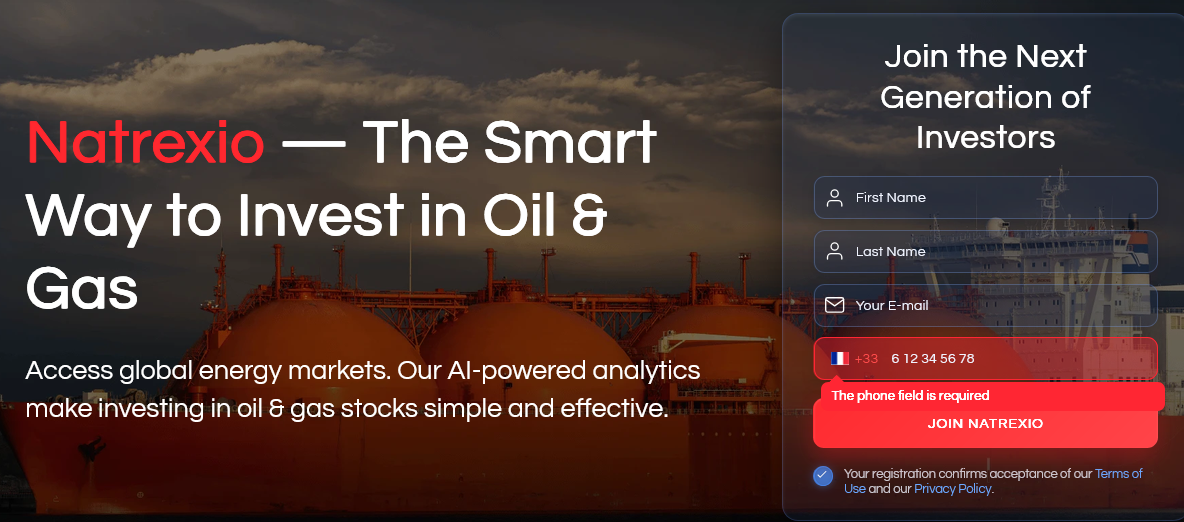
Natrexio advertises itself as an algorithmic system designed to bridge commodity markets—specifically oil and gas—with digital asset trading. Marketing materials pitch the software as a streamlined path for retail traders to capitalize on energy price swings using automated execution.
Our investigation examined the platform’s core mechanics, company registration, security posture, and broker routing behavior. The findings raise notable operational and regulatory concerns that prospective users should review before funding an account.
What Is Natrexio?
Natrexio operates primarily as a lead-generation funnel and automated execution interface rather than a standalone, regulated financial brokerage or exchange. The platform markets an automated algorithm aimed at trading energy futures (WTI Crude, Brent, Natural Gas) alongside major digital assets like Bitcoin (BTC) and Ethereum (ETH).
When users register on Natrexio, they are not depositing funds into a direct market exchange account hosted by Natrexio itself. Instead, the platform forwards user data to affiliated offshore or regional third-party brokerage partners. These external brokers execute trades and manage account balances.
- [User Registration on Natrexio]
- [Data Routed to Offshore Broker]
- [Deposit Requested via External Broker]
- [Automated or Manual Trades Executed on Broker Terminal]
How Natrexio Works
-
Registration & Contact: Users submit basic contact details (name, email, phone number) on
natrexio.comor secondary mirror sites likenatrexio.net. -
Account Routing: Upon registration, the backend matches the user with a partner broker depending on their geographic jurisdiction.
-
Fund Account: The assigned broker requires a minimum deposit, typically starting at $250 USD, accepted via credit card, wire transfer, or cryptocurrency.
-
Trading Execution: Users gain access to a web terminal. According to promotional material, the platform applies proprietary technical indicators to generate signals or place automated orders on crude oil or crypto pairings.
Critical Analysis & Key Findings
1. Absence of Regulatory Licensing
A primary check for any financial trading software involves verifying its regulatory status. Independent searches across official databases—including the Financial Conduct Authority (FCA) in the UK, the Commodity Futures Trading Commission (CFTC) in the US, and the Cyprus Securities and Exchange Commission (CySEC)—yield no registration records for Natrexio or its operating entities.
Trading commodities and derivative contracts without regulatory oversight removes basic consumer protections, such as compensation funds or segregated client bank accounts.
2. Domain Redundancy & Corporate Transparency
The presence of multiple domain names and derivative variations is a common structure used by affiliate lead-generation networks. These sites rarely disclose corporate registration details, parent company identities, executive leadership, or physical address locations.
3. Unverified Profitability Claims
Promotional pages associated with Natrexio claim high win rates and passive daily returns based on algorithmic energy trading. However, the platform provides no verified historical performance audits, such as an independently verified Myfxbook statement, audited brokerage statements, or public trading logs.
In commodity and cryptocurrency trading, fixed or high-probability claims remain unachievable consistently due to inherent market volatility, slippage, and macroeconomic news shocks.
Account Setup and Minimums
Setting up an account requires minimal verification on the primary landing page, but full identity verification (KYC) depends entirely on the third-party broker assigned to the user.
- Step 1: Form Submission (Name, Email, Phone)
- Step 2: Phone/Email Verification by Broker Account Manager
- Step 3: Identity Verification (ID / Proof of Address requested by Broker)
- Step 4: Deposit Capital (Minimum $250)
- Step 5: Access Web Terminal
Deposit methods vary by assigned broker:
-
Credit Cards (Visa, Mastercard)
-
Wire Transfers
-
Cryptocurrency Transfers (USDT, BTC)
Note: Withdrawing capital requires submitting cancellation and identity documentation directly to the assigned third-party broker, not to Natrexio itself.
Security and Operational Risks
-
Third-Party Broker Quality: Because Natrexio acts as an intermediary router, user deposits do not reside with Natrexio. Some assigned brokers operate in light-touch jurisdictions (such as St. Vincent and the Grenadines or Vanuatu), offering little operational recourse in account disputes.
-
Aggressive Sales Outreach: Feedback across community forums indicates that submitting phone credentials during registration often results in frequent follow-up calls from account representatives urging larger deposits.
-
Data Handling: Terms of service on affiliate funnels frequently permit sharing personal details with third-party networks, leading to promotional communications across multiple platforms.
Is Natrexio Legit or a Red Flag?
Based on our editorial analysis, Natrexio displays operational traits common to high-risk affiliate marketing funnels rather than an institutional-grade trading platform.
Risk Evaluation Checklist:
- Unregulated entity
- Anonymous team & ownership
- Uses multiple mirror domains
- Unverified performance metrics
- Third-party broker redirection
While registering and funding an account may allow access to a basic trading terminal, the lack of regulatory accountability, lack of verified performance logs, and reliance on anonymous offshore brokers present elevated risks to capital safety.
Alternatives to Natrexio Platform:
Investors looking for exposure to oil, natural gas, and digital assets have access to established, fully regulated alternatives:
-
eToro: Offers regulated exposure to commodity ETFs, energy stocks, crude oil CFDs, and spot cryptocurrencies with built-in social copy-trading under FCA, CySEC, and ASIC oversight.
-
Interactive Brokers: Provides direct access to global crude oil and natural gas futures markets, option contracts, and crypto products with institutional pricing and regulatory coverage.
-
Pionex: Provides free, built-in automated crypto trading bots (such as Grid and DCA bots) with transparent exchange liquidity and clear fee structures.
Frequently Asked Questions
Q. What is Natrexio Trading Platform?
Natrexio is an online marketing and routing platform that claims to use automated algorithms to trade oil, gas, and cryptocurrency assets by connecting users with third-party brokerages.
Q. Is Natrexio regulated by the FCA or SEC?
No. Natrexio does not hold licenses from the FCA, SEC, CFTC, CySEC, or any other primary financial regulatory authority.
Q. How much does it cost to use Natrexio?
Natrexio does not charge an upfront software fee, but the connected brokers require a minimum initial deposit of $250 USD to activate trading.
Q. Can you withdraw money easily from Natrexio?
Withdrawals are handled entirely by the assigned third-party broker, not Natrexio. Withdrawal speeds and conditions depend on the broker’s specific terms and identity verification requirements.
Final Verdict
Natrexio presents significant operational and transparency risks. The platform functions as an unaccredited marketing bridge that directs retail traders to third-party brokerage environments, often operating in light-touch regulatory zones.
Without verified trading statistics, identifiable corporate leadership, or recognized regulatory licensing, capital deposited through this platform carries a high risk of loss. Investors seeking exposure to energy commodities or digital assets should utilize established, tier-1 regulated brokerages or exchanges instead.
About The Author