




Best Bitcoin Wallets of 2026: Hardware vs. Software Compared
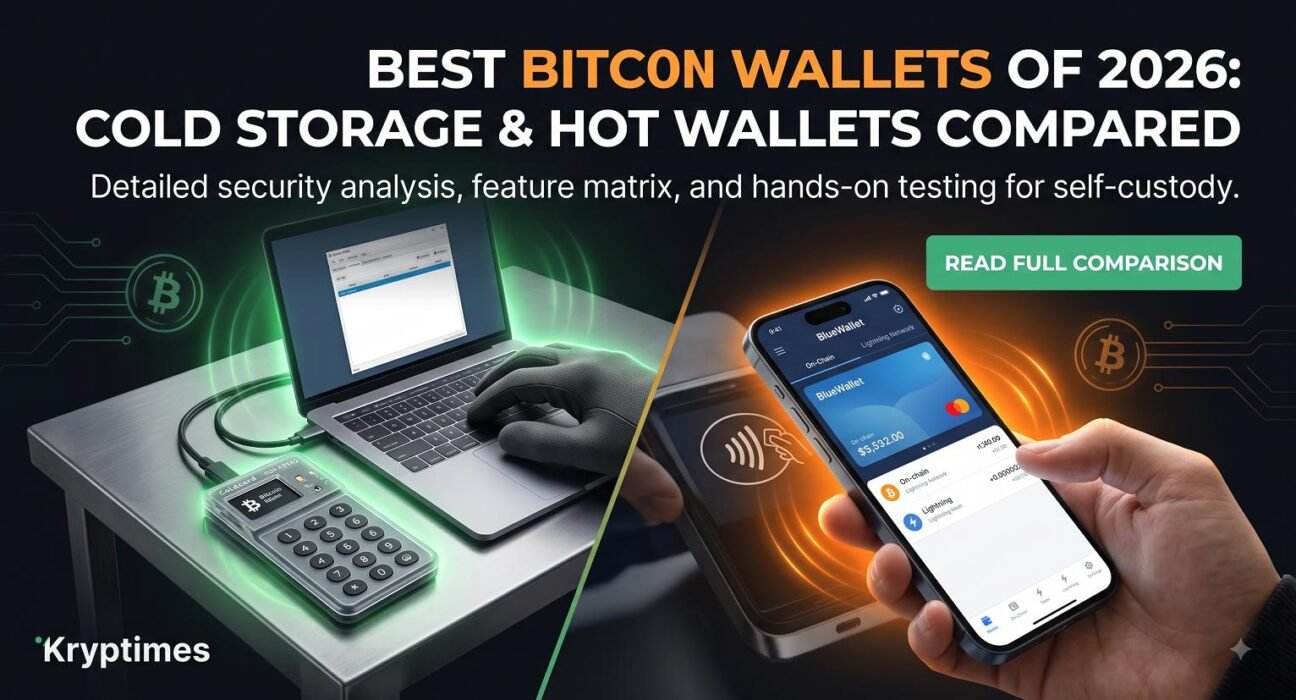
Holding Bitcoin without controlling your private keys means relying on a third party’s solvency, internal risk controls, and regulatory standing. The foundational premise of Bitcoin has always been financial sovereignty—the ability to act as your own bank without needing permission or fearing third-party freeze events. Achieving true self-custody, however, requires choosing software and hardware built to defend private keys against remote network attacks, physical device theft, and operational mistakes.
The Bitcoin wallet ecosystem has matured significantly. Modern wallets range from air-gapped, Bitcoin-only hardware units featuring QWERTY keyboards and anti-exfiltration protocols to intuitive mobile applications supporting native Layer 2 Lightning payments and multisignature setups.
This comprehensive guide evaluates the top Bitcoin wallets across cold (hardware) and hot (software) categories. We analyze build quality, threat models, transaction privacy, key generation standards, and user experience to help you choose the right storage architecture for your holdings.
Understanding Bitcoin Custody: Hot vs. Cold Storage
Every Bitcoin wallet serves one fundamental purpose: storing and using private keys. Your coins do not reside inside the wallet; they exist as Unspent Transaction Outputs (UTXOs) recorded on the public Bitcoin blockchain ledger. The wallet holds the cryptographic keys required to sign transactions authorising the transfer of those outputs.
Wallets fall into two primary structural models:
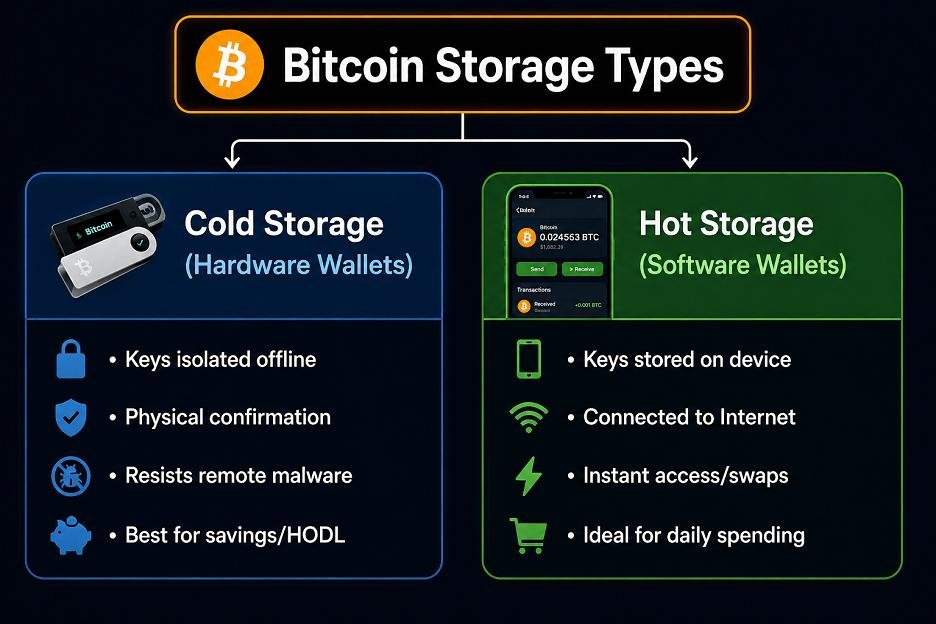
Cold Storage (Hardware Wallets)
Hardware devices keep your private keys isolated on a dedicated physical device, completely disconnected from the internet. Transactions are constructed on an internet-connected app (like Sparrow, Electrum, or Ledger Live) and sent to the physical device as a Partially Signed Bitcoin Transaction (PSBT). The device signs the transaction internally and sends back only the signature. Even if the host computer or smartphone is infected with malware, the private keys never touch the network environment.
Hot Storage (Software Wallets)
Software applications run directly on desktop computers, smartphones, or web browsers. Because private keys reside on an internet-connected device, they are exposed to theoretical risks from keyloggers, malicious apps, system vulnerabilities, and remote memory dumps. However, hot wallets offer zero hardware cost, instant transaction authorization, seamless integration with Lightning Network channels, and convenient mobile payments.
Our Evaluation Methodology
To determine the top Bitcoin wallets, our research team tested each wallet across five key operational criteria:
-
Security Architecture & Supply Chain Verification: Evaluation of Secure Element (SE) hardware integration, open-source firmware auditing, physical tamper resistance, verifiable bootloaders, and anti-exfiltration signing methods.
-
Key Management & Recovery: Support for BIP-39 seed phrases, Shamir’s Secret Sharing (SLIP-039), passphrase extensions (often called “25th word”), and unencumbered recovery on third-party software.
-
Transaction Control & Privacy: Availability of manual UTXO selection (coin control), custom fee control, connection to personal Bitcoin full nodes (via Electrum Server/Esplora), and support for Taproot (P2TR) addresses.
-
Usability & Build Quality: Screen readability, physical durability, navigation ergonomics, software design, and connectivity options (USB-C, MicroSD, QR code air-gapping, NFC, Bluetooth).
-
Protocol Support: Compatibility with PSBT (BIP-174/BIP-370), multisignature schemes (BIP-129 / Miniscript), and Layer 2 extensions such as the Lightning Network.
Top Hardware Bitcoin Wallets (Cold Storage)
1. Coldcard Q & Mk4: Peak Bitcoin-Only Security
Designed by Coinkite, the Coldcard series—specifically the flagship Coldcard Q and the compact Coldcard Mk4—represents the gold standard for dedicated Bitcoin hardware security. Coinkite maintains a strict Bitcoin-only focus, eliminating attack vectors associated with multi-asset altcoin codebases.
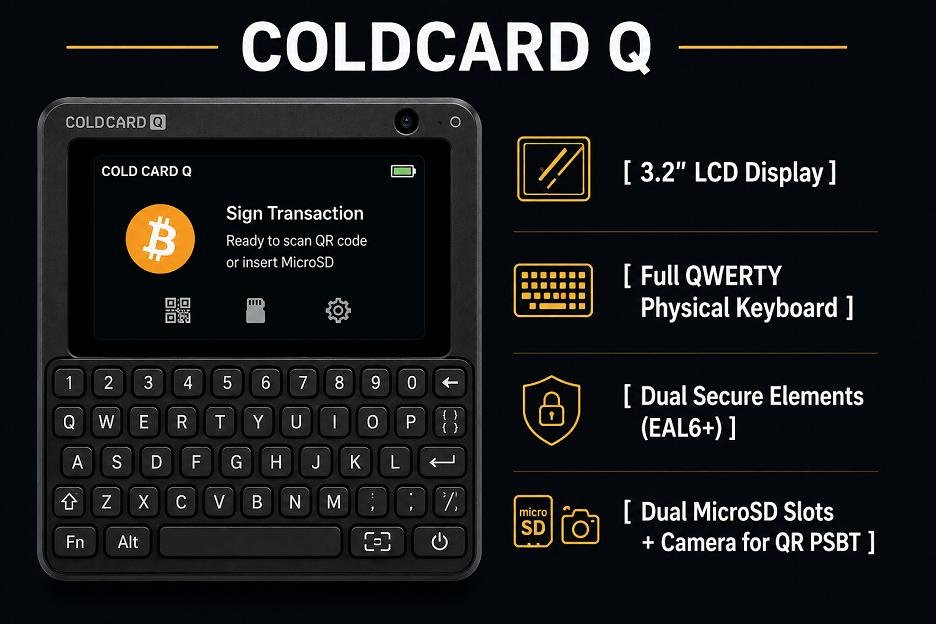
Key Technical Highlights
-
True Air-Gapped Operation: The Coldcard Q features a full physical QWERTY keyboard, a high-contrast display, dual MicroSD card slots, and an integrated QR code scanner for completely air-gapped PSBT signing.
-
Dual Secure Elements: Employs two independent Secure Element chips from different manufacturers to protect against hardware-level physical probing attacks.
-
Duress & Destruction Features: Includes configurable duress PINs (which unlock a decoy wallet), a trick PIN that brick-locks the device, and a physical “shoot-me” trace that permanently destroys the Secure Element if drilled through.
Verdict
The Coldcard Q is the ultimate tool for Bitcoin maximalists, serious self-custodians, and high-net-worth cold storage holders. Its learning curve is steeper than mass-market options, but its security model is unmatched.
2. Trezor Safe 5: Open-Source Transparency with Secure Hardware
SatoshiLabs introduced the Trezor Safe 5 as their flagship hardware wallet, directly addressing historical hardware vulnerabilities while preserving open-source transparency.
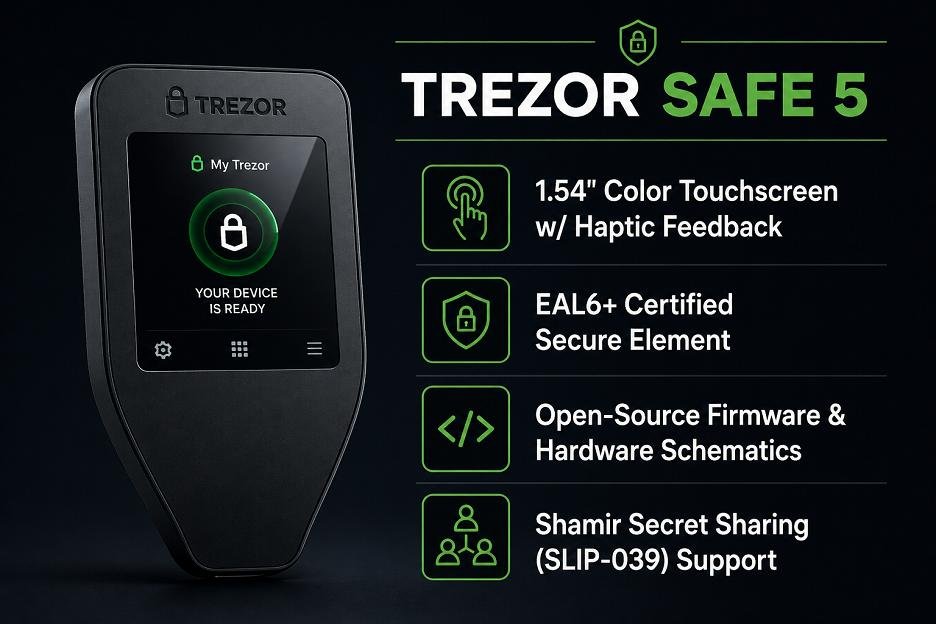
Key Technical Highlights
-
EAL6+ Secure Element: Earlier Trezor models relied solely on general-purpose microcontrollers, leaving them susceptible to physical fault injection if an attacker gained physical possession. The Safe 5 integrates an EAL6+ Secure Element chip to protect PIN verification and key generation offline while maintaining fully auditable, open-source code.
-
Shamir Backup (SLIP-039): Allows users to split their master recovery key into multiple share phrases (e.g., a 3-of-5 threshold) natively during initial setup.
-
Bitcoin-Only Firmware Option: Users can flash official Bitcoin-only firmware via Trezor Suite, stripping away all alternative asset drivers to minimize attack surface.
Verdict
The Trezor Safe 5 strikes an excellent balance between auditability, physical resistance, and intuitive operation. It is ideal for users who prioritize open-source software without sacrificing physical device protection.
3. Blockstream Jade: High-Security Budget Air-Gapping
Blockstream’s Jade remains one of the most compelling value propositions in cold storage. Selling at a fraction of the cost of competitors, Jade packs enterprise-grade security features into a compact, open-source unit.
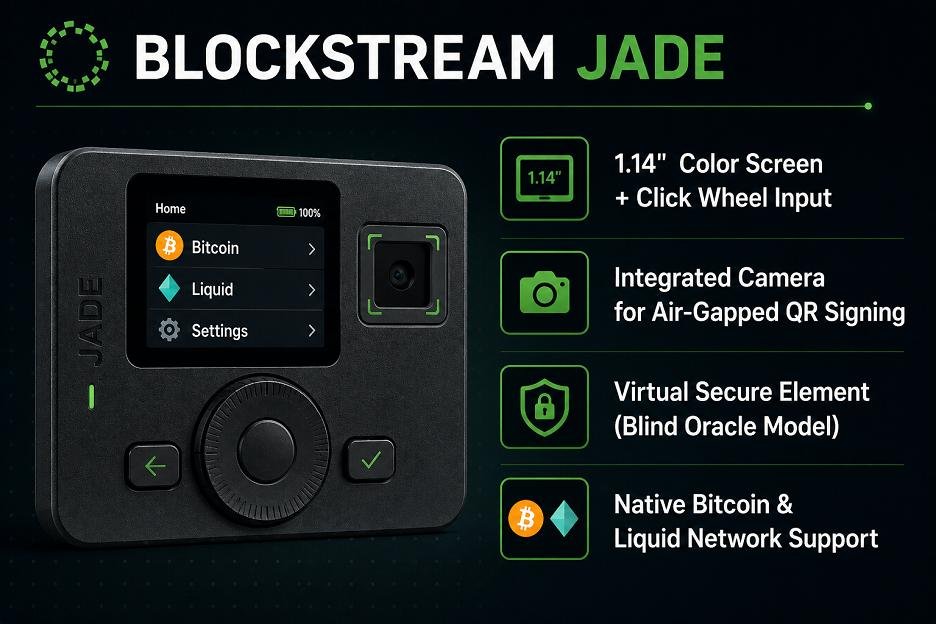
Key Technical Highlights
-
Virtual Secure Element Architecture: Rather than using a proprietary hardware Secure Element, Jade uses an open-source “Blind Oracle” model. The encrypted key stored on the device requires a key-server handshake (or your self-hosted server) to decrypt, preventing physical extraction attacks without relying on closed-source hardware secrets.
-
Camera-Based Air-Gap: Incorporates a built-in camera for reading QR codes, enabling completely air-gapped transaction signing when paired with companion software like Green, Sparrow, or BlueWallet.
-
Liquid Network Native: Offers out-of-the-box support for Bitcoin mainnet as well as Liquid sidechain assets (L-BTC and issued assets).
Verdict
Blockstream Jade is the absolute best entry-level hardware wallet for budget-conscious users seeking air-gapped security.
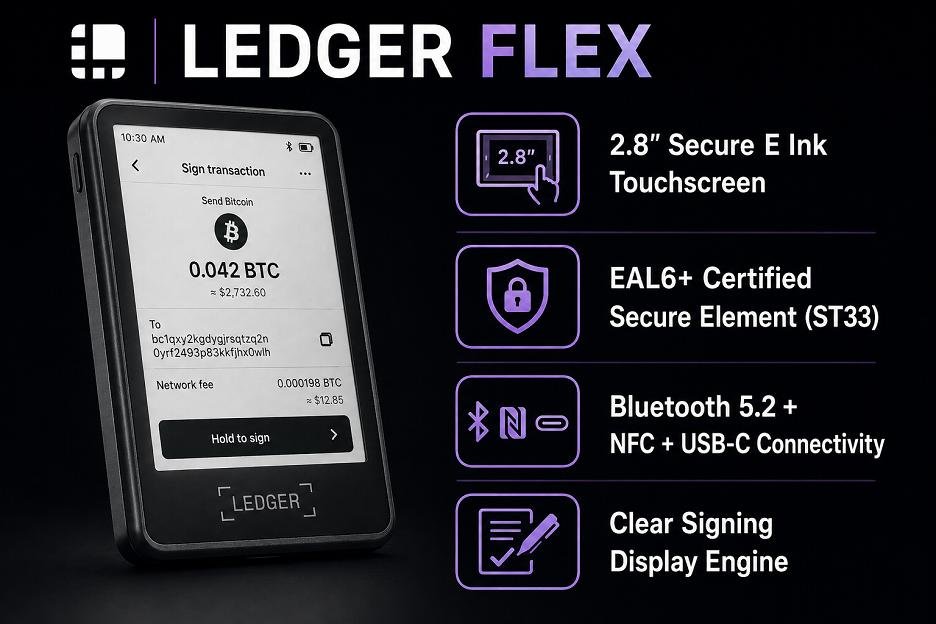
4. Ledger Flex & Nano X: Premium Mobile & Ecosystem Integration
Ledger remains the industry’s largest hardware wallet manufacturer by volume. The lineup includes the proven Ledger Nano X alongside the touch-screen Ledger Flex and high-end Ledger Stax.
Key Technical Highlights
-
EAL6+ Secure Element & Secure Screen: Ledger designs devices around custom Secure Element chips running the proprietary BOLOS operating system. On the Ledger Flex and Stax, the secure chip drives the display directly, enabling reliable clear-signing where transaction parameters cannot be manipulated by an infected host.
-
Polished Ecosystem: The Ledger Live app offers seamless fiat on-ramps, portfolio analytics, and account management across desktop and mobile platforms.
-
Ecosystem Trade-offs: Ledger’s core operating system remains closed-source, and the launch of the opt-in “Ledger Recover” key recovery service sparked debate among privacy purists regarding backdoors and key extraction risk models.
Verdict
The Ledger Flex and Nano X offer top-tier build quality, polished user interfaces, and mobile convenience via Bluetooth/NFC. However, users seeking pure open-source verification may prefer Trezor or Coldcard.
5. BitBox02 Bitcoin-Only: Swiss Minimalist Engineering
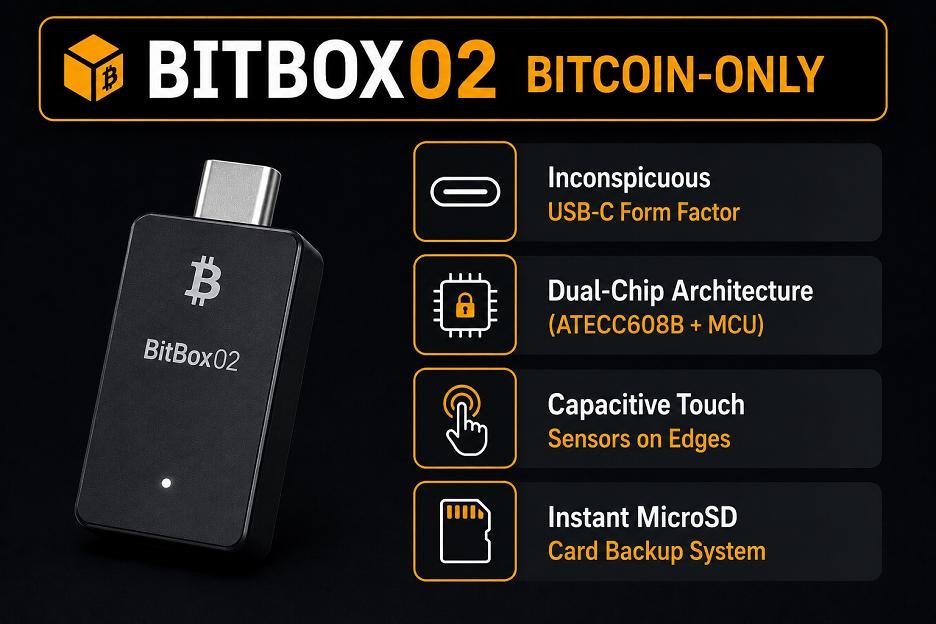
Manufactured in Switzerland by Shift Crypto, the BitBox02 Bitcoin-Only Edition is designed specifically for users who want zero-clutter, highly audited cold storage.
Key Technical Highlights
-
Dedicated Bitcoin Firmware: The Bitcoin-only edition ships with dedicated firmware, preventing accidental flashing of multi-coin codebases.
-
Seamless MicroSD Backups: Automatically backs up your BIP-39 seed phrase onto an encrypted MicroSD card during initial setup, eliminating human error during paper seed generation.
-
Swiss Dual-Chip Architecture: Combines an open-source microcontroller with a Secure Element chip, balancing physical tamper protection with verifiable code.
Verdict
BitBox02 is the ultimate plug-and-play cold storage device for individuals who want robust Swiss security without managing complex command-line options or bulky hardware.
Top Software Bitcoin Wallets (Hot Storage & Desktop Nodes)
While cold storage is best for wealth preservation, software wallets provide essential daily utility, node management, and transaction structuring.
1. Sparrow Wallet: The Power User’s Desktop Standard
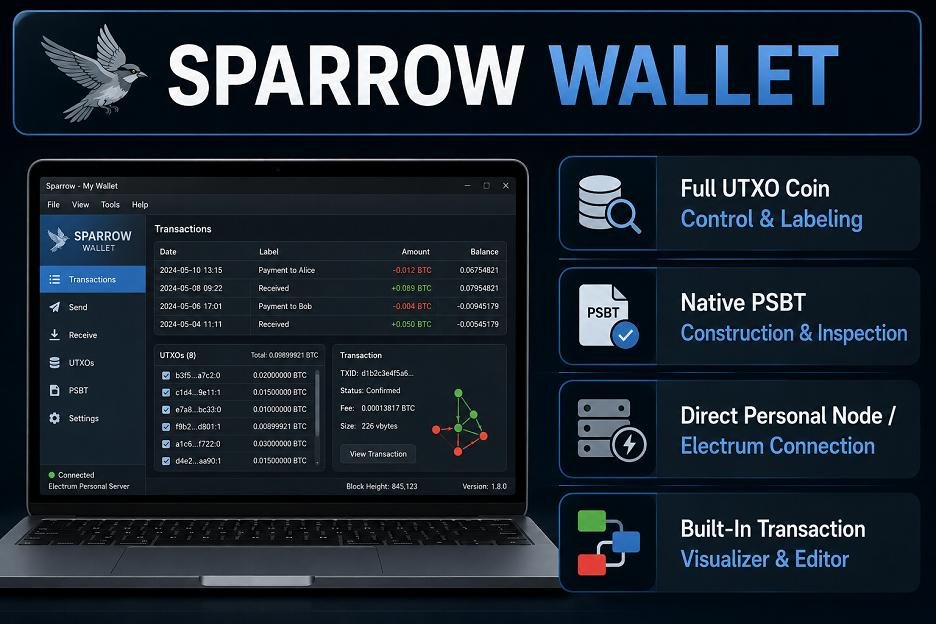
Sparrow Wallet (Desktop: Windows, macOS, Linux) has emerged as the premier Bitcoin wallet interface for detailed transaction analysis, coin control, and hardware integration.
Core Strengths
-
Complete Financial Transparency: Displays detailed breakdown graphs of your UTXOs, script types, derivation paths, and transaction fees.
-
Robust Hardware Bridge: Acts as an offline controller for Coldcard, Trezor, Ledger, BitBox02, and Jade devices via USB or air-gapped PSBT flows.
-
Privacy Controls: Connects directly to your own Bitcoin Core node or private Electrum server (Fulcrum/Electrs), preventing third-party IP address leakages.
2. BlueWallet: Premier Bitcoin & Lightning Mobile Companion
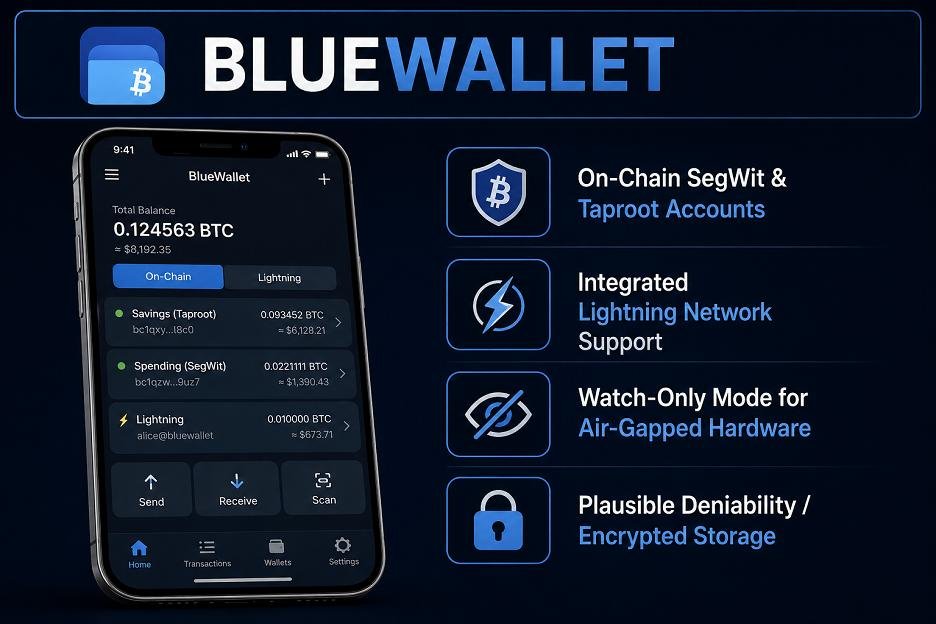
BlueWallet (Mobile: iOS, Android) is a benchmark open-source mobile Bitcoin wallet.
Core Strengths
-
Dual On-Chain & Layer 2 Support: Supports mainnet Bitcoin transactions with custom fee controls alongside Lightning Network payments for instant, low-cost daily transactions.
-
Watch-Only Functionality: Allows users to import extended public keys (
xpub/zpub) from cold storage devices, enabling real-time balance tracking and invoice generation on mobile without exposing private keys. -
Plausible Deniability: Supports setting a secondary password that opens a decoy wallet under physical compulsion scenarios.
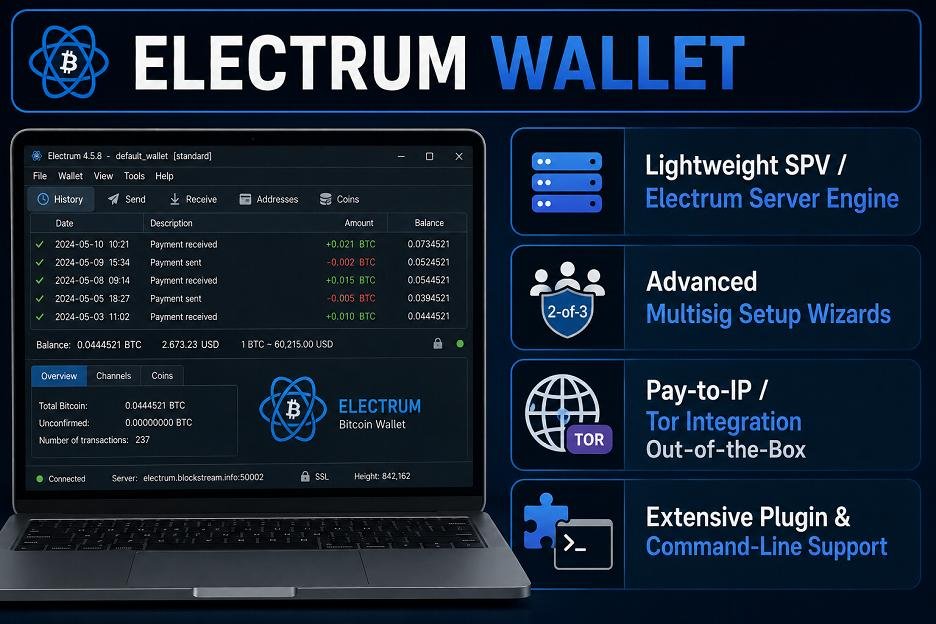
3. Electrum: The Classic Battle-Tested Interface
Active since 2011, Electrum is one of the oldest open-source Bitcoin clients.
Core Strengths
-
Ultra-Fast Synchronization: Uses Simple Payment Verification (SPV) to query decentralized Electrum servers, restoring large account balances almost instantaneously without downloading the entire blockchain.
-
Battle-Tested Security: Supports complex multisignature setups, replace-by-fee (RBF), child-pays-for-parent (CPFP), offline transaction signing, and command-line automation.
4. Exodus: Intuitive Design for Multi-Asset Portfolios
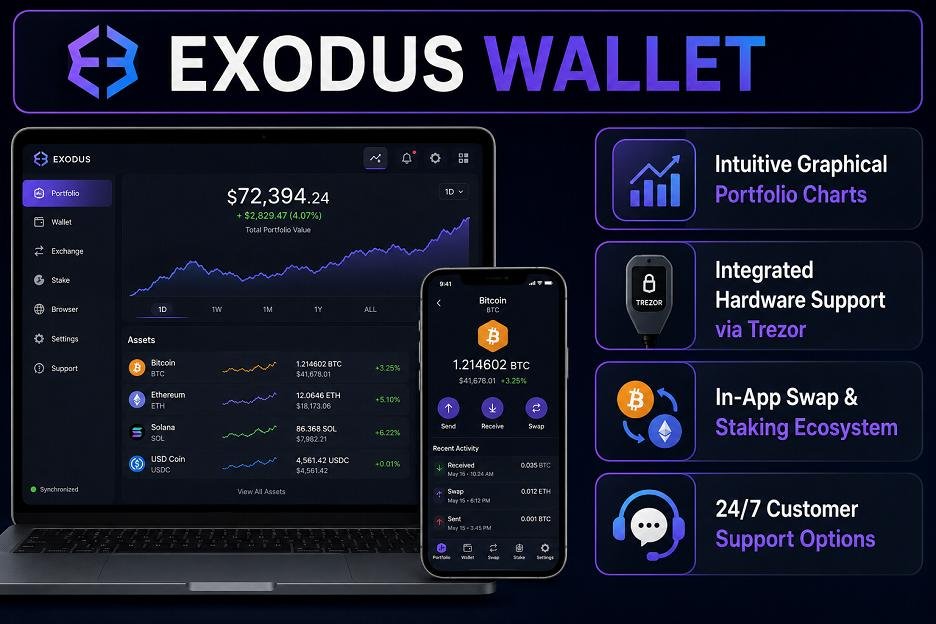
For users seeking an approachable interface that tracks Bitcoin alongside multi-asset portfolios, Exodus (Desktop, Mobile, Web) provides a clean visual interface.
Core Strengths
-
User Experience: Seamless portfolio graphics, automated fee calculations, and cross-device synchronization.
-
Trezor Integration: Pairs natively with Trezor hardware devices to upgrade security while maintaining the Exodus dashboard layout.
-
Trade-off Note: Exodus is closed-source and does not offer advanced Bitcoin privacy features like manual coin control or personal full-node routing.
Comprehensive Comparison Matrix
| Wallet | Category | Target Audience | Primary Connection | Secure Element | Firmware Type | Relative Price |
| Coldcard Q | Hardware (Cold) | Power Users / HODLers | USB-C, MicroSD, QR Code | Dual EAL6+ | Open Source (Verifiable) | $$$$ |
| Trezor Safe 5 | Hardware (Cold) | Open-Source Enthusiasts | USB-C | EAL6+ | 100% Open Source | $$$ |
| Blockstream Jade | Hardware (Cold) | Budget Cold Storage | USB-C, Bluetooth, QR Code | Virtual / Oracle | 100% Open Source | $ |
| Ledger Flex | Hardware (Cold) | Mobile & NFT / Multi-Coin | USB-C, Bluetooth, NFC | EAL6+ | Closed-Source OS | $$$$ |
| BitBox02 BTC | Hardware (Cold) | Swiss Minimalists | USB-C, MicroSD | Dual (ATECC608B) | Open Source App/FW | $$$ |
| Sparrow Wallet | Software (Desktop) | Node Owners / Analysts | Internet / Full Node | N/A (Hot) | 100% Open Source | Free |
| BlueWallet | Software (Mobile) | Everyday Users & Lightning | Internet / SPV | N/A (Hot) | 100% Open Source | Free |
| Electrum | Software (Desktop) | Veterans / SPV Speed | Internet / SPV | N/A (Hot) | 100% Open Source | Free |
| Exodus | Software (Multi) | Visual Beginners | Internet | N/A (Hot) | Proprietary | Free |
Advanced Custody Protocols: Air-Gapping, Passphrases, and Multisig
As wallet technology evolves, relying on a simple 12- or 24-word seed phrase is only the baseline for self-custody. Serious investors use multi-layered defense strategies to protect against physical coercion, supply chain attacks, and single points of failure.
1. Air-Gapped PSBT Execution
Air-gapping ensures a wallet device never makes a direct electrical or wireless connection to an internet-connected host.
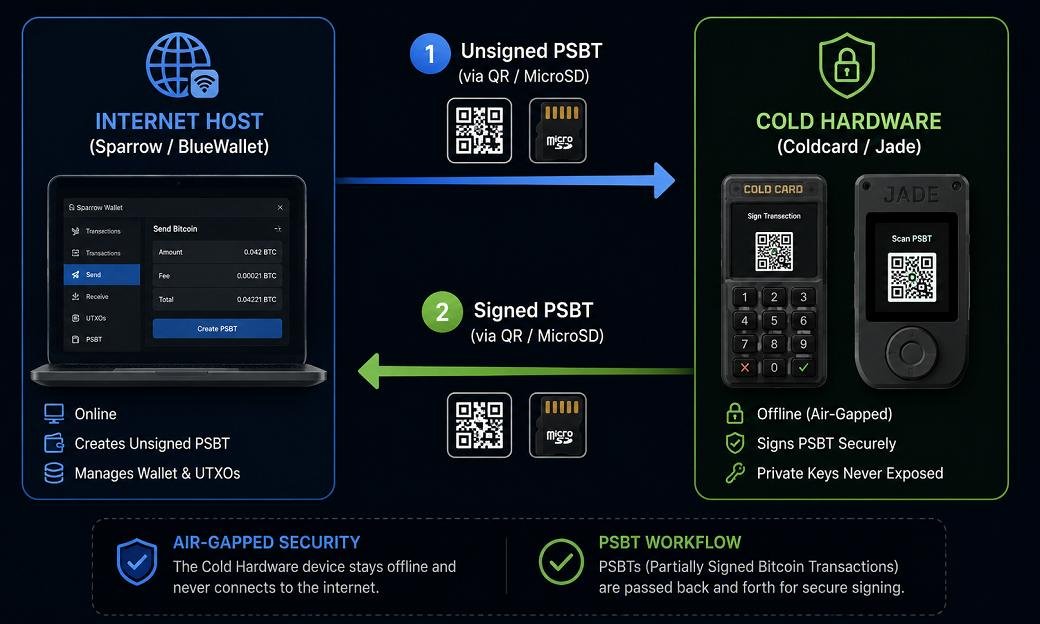
By exchanging data exclusively via camera QR code scans or physical MicroSD transfers, you eliminate malicious USB code execution, badUSB attacks, and background Bluetooth exploits.
2. BIP-39 Passphrases (“The 25th Word”)
A passphrase acts as an optional extension added to your master seed phrase during wallet derivation.
-
How it works: Supplying a passphrase changes the mathematical derivation path, generating an entirely unique set of master keys and wallet addresses.
-
Plausible Deniability: Entering your standard 24 words without the passphrase opens a default wallet. If forced under coercion, revealing the 24-word seed exposes only a small decoy balance, while your primary holdings remain hidden behind the passphrase.
-
Critical Caution: Passphrases are not stored anywhere on the physical device. If you lose your passphrase, no backup or recovery service can restore your funds.
3. Multisignature (Multisig) Vaults
Multisig eliminates single points of failure by requiring approval from $M$-of-$N$ independent keys to spend funds (for example, a 2-of-3 scheme).
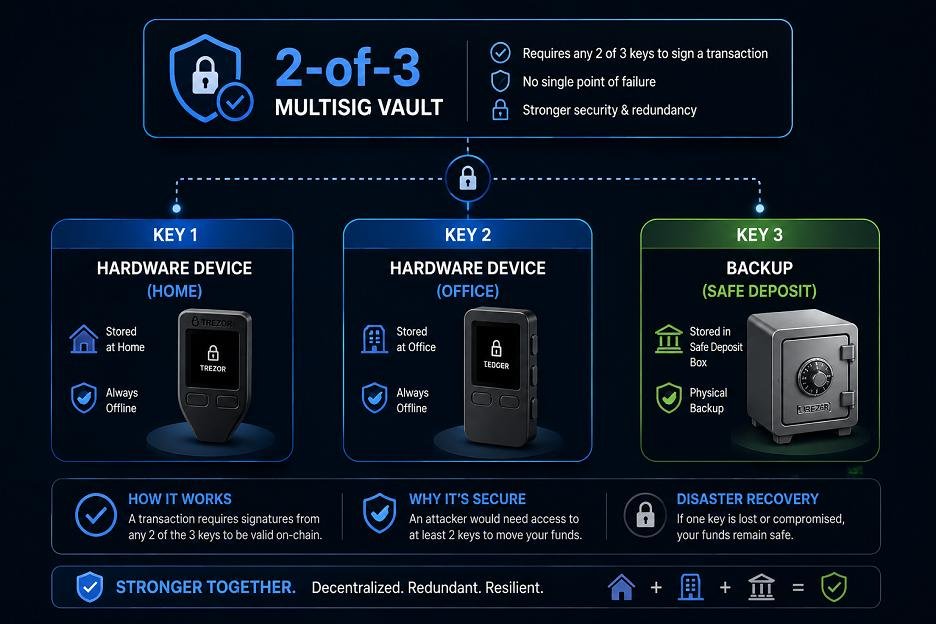
In a 2-of-3 setup:
-
If one hardware device suffers a physical chip failure, you retain access via the remaining two keys.
-
If a physical thief steals one of your hardware wallets, they cannot spend your Bitcoin without a second independent signature.
-
Keys can be separated geographically across hardware vendors (e.g., combining a Coldcard, a Trezor, and a BitBox02) to mitigate vendor supply chain risks.
Frequently Asked Questions
1. What happens if my hardware wallet company goes bankrupt?
Your Bitcoin is secured by open cryptographic standards (BIP-32, BIP-39, and BIP-44), not by the hardware company. If your device manufacturer ceases operations, you can import your 12- or 24-word recovery seed into any compatible open-source wallet (such as Sparrow, Electrum, or BlueWallet) to regain complete access to your funds.
2. Should I choose a 12-word or 24-word seed phrase?
A 12-word recovery phrase provides 128 bits of entropy, which is mathematically unhackable using current and foreseeable classical computing power. A 24-word phrase provides 256 bits of entropy. While 24-word seeds offer higher theoretical brute-force resistance, 12-word seeds reduce human error during transcription and physical metal backup stamping. Both conform to BIP-39 security standards.
3. Are hot software wallets safe for large amounts of Bitcoin?
Hot software wallets are exposed to operating system vulnerabilities, mobile malware, phishing links, and keylogging scripts. While suitable for spending money or smaller operational balances, storing significant life savings on a hot wallet introduces unnecessary network risk. Large balances should always be secured using cold storage hardware or multisig setups.
4. Why are Bitcoin-only firmware options recommended?
Multi-asset wallets must support thousands of alternative token standards, smart contract interactions, and varied cryptographic curves. This drastically expands the lines of code in the device’s firmware, increasing the potential attack surface. Bitcoin-only firmware strips out all non-essential drivers, reducing complexity and potential security vulnerabilities.
5. What is the best way to back up a seed phrase physically?
Paper seed backups can degrade from water exposure, humidity, or fire. The industry standard for long-term cold storage is stamping your seed phrase words or corresponding numeric BIP-39 indexes onto solid stainless steel or titanium plates capable of surviving temperatures exceeding 2,000°F (1,100°C).
6. Can a hardware wallet be hacked if physically stolen?
If an attacker physically possesses your hardware wallet, their ability to access funds depends on the device architecture and your PIN strength. Devices equipped with certified Secure Element chips (such as the Coldcard, Trezor Safe 5, or BitBox02) enforce strict PIN attempt throttles and auto-wipe mechanisms to resist hardware fault injection and memory extraction attacks.
Final Verdict:
Choosing the best Bitcoin wallet depends directly on your operational requirements, holdings size, and technical comfort level:
- For High-Value Cold Storage & Power Users: The Coldcard Q paired with Sparrow Wallet provides an elite, air-gapped security stack built exclusively for Bitcoin.
- For Best Open-Source & User Experience Balance: The Trezor Safe 5 delivers transparent, fully auditable firmware backed by modern EAL6+ Secure Element hardware and Shamir backup resilience.
- For Budget-Conscious Self-Custody: The Blockstream Jade offers complete air-gapped QR signing and open-source architecture at an accessible price point.
- For Mobile & Everyday Utility: BlueWallet stands out as an exceptional mobile hot wallet for managing on-chain spending and fast Layer 2 Lightning transactions.
Ultimately, the most secure wallet setup is one whose operational requirements you can execute consistently without risking human error. Start by taking control of your private keys with a hardware wallet you trust, back up your recovery seed in steel, and never compromise on self-custody principles.
About The Author