




What Will Happen After the Next Bitcoin Halving? The Post-Supply Shock Reality

Imagine a world where the most valuable digital asset on the planet suddenly becomes twice as hard to produce overnight. This isn’t a “what if” scenario; it’s a programmed certainty. In the world of crypto, we call this the Bitcoin halving.
As we sit here in March 2026, the dust from the 2024 halving has settled, and the industry is already whispering about the next one. But what actually happens when the “New BTC” faucet gets tightened? Is it a guaranteed moon mission, or is the script changing?
The “Halving” 101: Why Does It Even Happen?
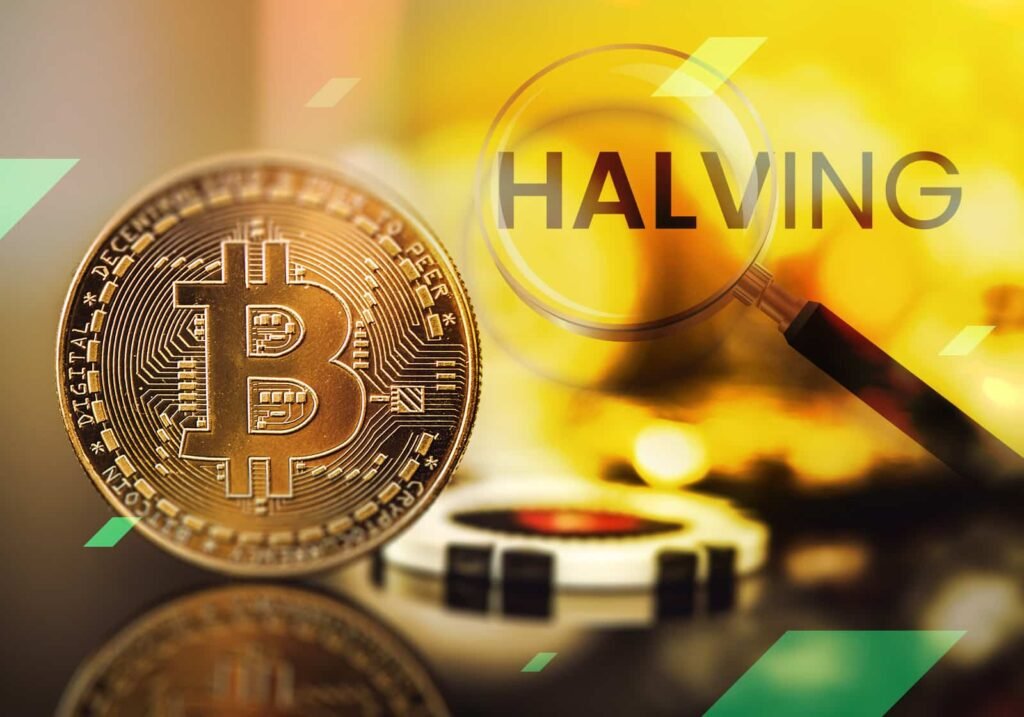
At its core, the Bitcoin halving is Bitcoin’s anti-inflation medicine. Satoshi Nakamoto, the mysterious creator, built a rule into the code: every 210,000 blocks (roughly every four years), the reward given to miners is cut in half.
- 2012: Reward dropped from 50 to 25 BTC.
- 2016: Dropped to 12.5 BTC.
- 2020: Dropped to 6.25 BTC.
- 2024: Dropped to 3.125 BTC.
- Next (Expected 2028): It will drop to a mere 1.5625 BTC.
This ensures that there will never be more than 21 million Bitcoins in existence. It’s the ultimate game of digital musical chairs, and the chairs are being pulled away.
What Happens Historically? The “Triple Phase” Cycle
If history is our teacher, the aftermath of a Bitcoin halving usually follows a predictable, albeit volatile, three-step dance.
- The Survival of the Fittest (0-6 Months Post-Halving)
Immediately after a halving, miners feel the heat. Their income effectively drops by 50% in an instant. This often leads to “miner capitulation,” where inefficient miners turn off their rigs. Interestingly, this hasn’t crashed the network; it just makes it leaner and meaner.
- The Supply Shock Rally (6-18 Months Post-Halving)
This is the “Golden Window.” As the market realizes fewer new Bitcoins are being sold by miners, the scarcity starts to bite. Historically, this is when we see those eye-popping rallies that make headlines. For instance, after the 2020 event, Bitcoin went from roughly $8,800 to an all-time high of $69,000 within a year.
- The New Plateau
Eventually, the hype cools down, and Bitcoin finds a “new normal” price level—usually significantly higher than where it started before the halving cycle began.
Why 2026 Feels Different: The Institutional Era
While we are currently in the mid-cycle of the 2024 halving, 2026 has introduced a new player: Spot Bitcoin ETFs.
In previous years, halvings were driven by retail hype and “OG” HODLers. Today, massive Wall Street funds are absorbing Bitcoin supply daily. This institutional demand is acting like a giant sponge, potentially making the “supply shock” from halvings even more dramatic than before.
- Scarcity is King: With less BTC being mined and more being locked in ETFs, the “liquid supply” is at historic lows.
- Regulatory Clarity: Unlike 2020, 2026 has seen clearer rules from the SEC and CFTC, making “big money” feel safe staying in the game.
What This Means for Investors
If you’re looking at the long-term horizon, the Bitcoin halving reinforces one thing: scarcity.
For investors, the post-halving period is usually a test of patience. The price rarely “moons” the day of the event. Instead, it’s a slow-burn effect. By the time we hit the next halving in 2028, many analysts believe the “floor” for Bitcoin could be higher than most people’s current “ceiling.”
Have you considered how a shrinking supply might impact your portfolio over the next two years?
Quick Summary: Key Takeaways
- Supply Cut: The amount of new BTC entering the market drops by 50% every 4 years.
- Delayed Impact: Price surges typically happen 6–18 months after the event.
- ETF Factor: Institutional buying is now a major counter-force to miner selling pressure.
- Fixed Cap: No matter what happens, the 21 million limit remains set in stone.
FAQ: Your Questions Answered
Q: Does the price always go up after a halving?
A: Historically, yes, but it’s not a law of physics. Macroeconomic factors like interest rates and global regulations also play a massive role.
Q: What happens when the block reward hits zero?
A: Around the year 2140, no new BTC will be created. At that point, miners will be paid entirely through transaction fees.
Q: Is it too late to buy after a halving has happened?
A: Many investors use a Dollar Cost Averaging (DCA) strategy to avoid timing the “perfect” post-halving dip, focusing on the four-year cycle instead.
As we look toward the 2028 halving, one thing is certain: Bitcoin’s code doesn’t care about the news, the Fed, or the critics. It just keeps ticking, block by block.
KrypTimes – Stay ahead in the world of crypto.
About The Author