



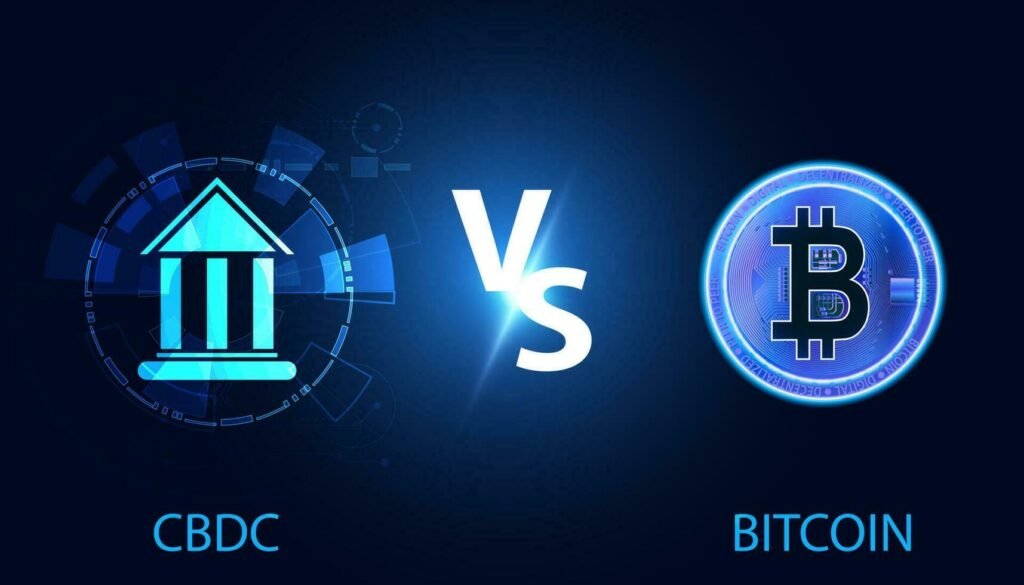


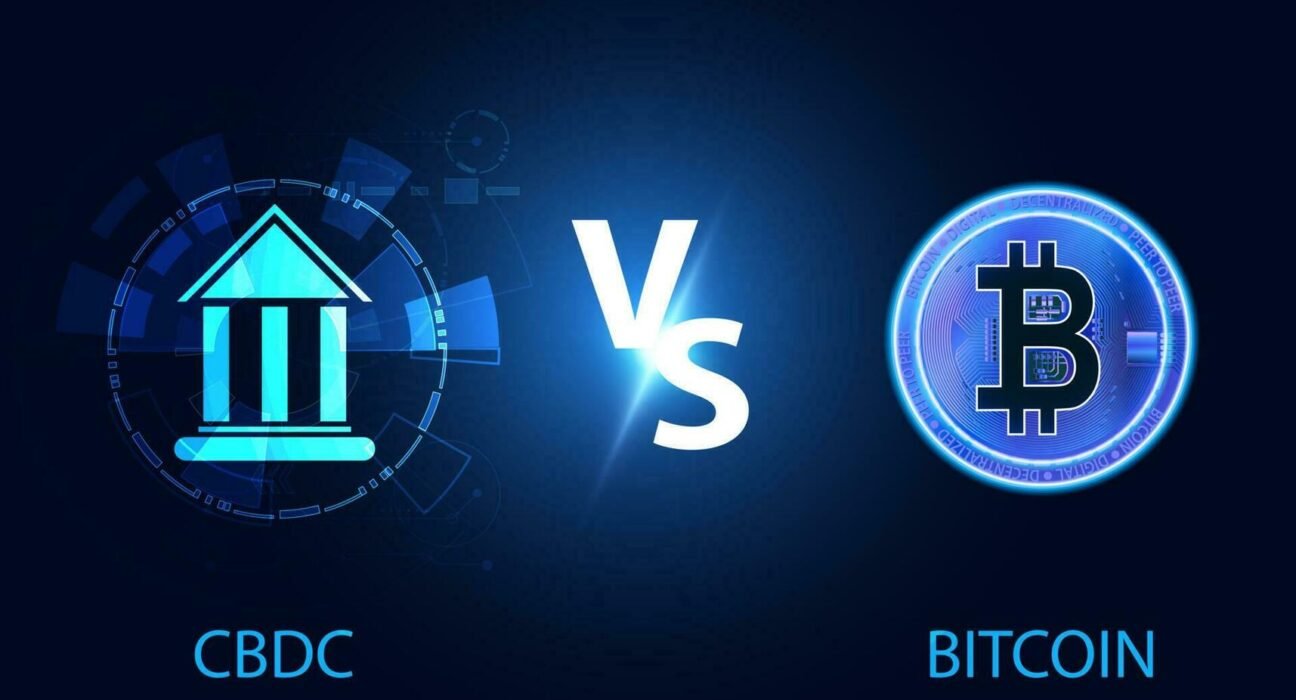
CBDCs vs Crypto: Is Your Digital Wallet About to Get a Government Makeover?
Imagine waking up to a world where your physical wallet is a relic of the past. Instead of reaching for a leather bifold, you tap a government-issued app to pay for your morning coffee. But here is the twist: that digital dollar in your phone isn’t Bitcoin, and it’s definitely not a private bank deposit. It is a Central Bank Digital Currency (CBDC).
As we move through 2026, the battle for the future of money has reached a boiling point. On one side, we have the decentralized rebels—Bitcoin and Ethereum. On the other hand, the world’s most powerful central banks are launching their own digital contenders.
The big question is no longer if money will go digital, but who will control the ledger. Will CBDCs vs Crypto be a winner-take-all fight, or can they actually live in the same pocket?
What is a CBDC, Anyway? (And Why Should You Care?)
Before we dive into the rivalry, let’s clear the air. A Central Bank Digital Currency (CBDC) is simply a digital version of a country’s fiat currency, like the US Dollar or the Euro.
Unlike Bitcoin ($BTC), which is powered by a decentralized community of miners and nodes, a CBDC is fully controlled by a central authority—the government. Think of it as “government-backed crypto,” but without the “crypto” spirit of anonymity.
The 2026 Landscape: Where do we stand?
- China’s e-CNY: Now the world’s first interest-bearing CBDC, circulating in over 20 major cities.
- The Digital Rupee: India has moved past its pilot phase, integrating the e-Rupee with existing UPI systems for millions of merchants.
- The US Stance: Following the GENIUS Act of 2025, the US has pivoted away from a retail CBDC, favoring regulated private stablecoins instead.
CBDCs vs Crypto: The Great Digital Divide
While both live on a screen, they are fundamentally different beasts. If crypto is the “internet of value,” then CBDCs are the “intranet of the state.”
1. Privacy vs. Surveillance
This is the biggest sticking point. With Bitcoin or Monero, your transactions are either pseudonymous or completely private.
With a CBDC, the central bank can see every cent you spend. Critics call it a “surveillance state” tool, while governments argue it’s necessary to stop money laundering.
2. Supply and Inflation
Bitcoin has a hard cap of 21 million coins. It’s “hard money.”
CBDCs, however, are subject to the whims of monetary policy. If the government needs to stimulate the economy, it can simply “print” more digital tokens, potentially diluting your purchasing power.
3. Programmability
This is where it gets futuristic. A CBDC could be “programmable.” Imagine a stimulus check that must be spent on groceries within 30 days, or it expires.
While this helps the government manage the economy, it takes away the user’s freedom to save.
Will Central Banks Actually “Replace” Crypto?
It’s tempting to see this as a zero-sum game, but the reality is more nuanced. Many experts believe CBDCs will replace physical cash and traditional bank transfers, rather than decentralized assets.
Bitcoin has evolved into “Digital Gold”—a store of value that people hold to hedge against the very central banks that issue CBDCs. Meanwhile, Ethereum and Solana have become the “App Stores” of finance, hosting DeFi (Decentralized Finance) protocols that a government digital currency simply can’t replicate.
“CBDCs are for payments; Crypto is for innovation and wealth preservation.”
Could you see yourself using a Digital Euro for taxes but keeping your savings in Bitcoin? Many already are.
What does this mean for Investors?
The rise of CBDCs is actually a massive “buy signal” for the legitimacy of blockchain technology.
- Institutional Adoption: As central banks build digital infrastructure, it becomes easier for big banks to offer crypto custody and trading.
- Stablecoin Growth: In regions like the US, the rejection of a retail CBDC has cleared the path for private stablecoins like USDC and USDT to become the “internet’s dollar.”
- The Privacy Premium: As government tracking increases, decentralized privacy coins and Layer-2 scaling solutions may see a surge in demand from users who value their financial anonymity.
Summary: The Coexistence Era
The “CBDC vs Crypto” debate isn’t about one killing the other. It’s about the bifurcation of money. We are entering an era where we will likely use CBDCs for our daily, regulated lives (paying taxes, receiving salaries) and Decentralized Crypto for global investing, DeFi, and long-term savings.
The digital revolution is here, and for the first time in history, you get to choose who manages your money: a computer code or a central committee.
FAQ: Common Questions
1. Is a CBDC safer than Bitcoin?
In terms of price stability, yes. A Digital Dollar will always be worth one dollar. However, Bitcoin is arguably “safer” from government seizure or inflationary printing.
2. Can I buy CBDCs on an exchange?
Generally, no. CBDCs are distributed through commercial banks or official government apps. They are not speculative assets you “trade” for profit.
3. Will CBDCs make stablecoins obsolete?
Unlikely. Stablecoins are the bridge to the world of DeFi and NFTs. Unless a CBDC is built to be “permissionless” (which most aren’t), stablecoins will remain the lifeblood of the crypto ecosystem.
About The Author